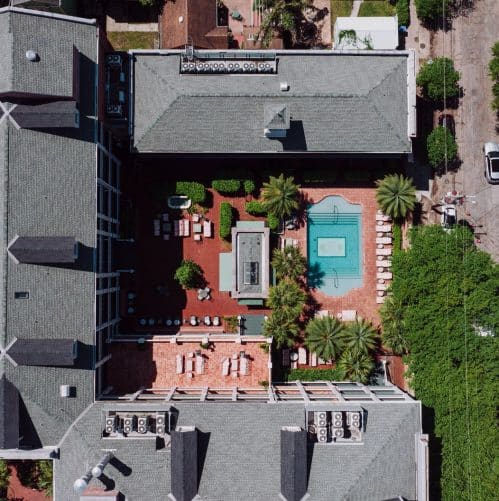
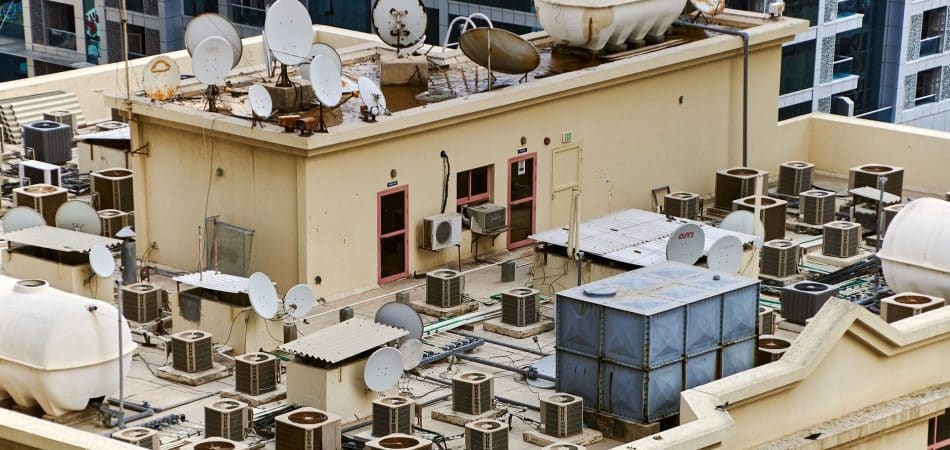
Rooftop HVAC units, pipes, and vents create penetration points that account for a large share of commercial roof leaks, and unmanaged foot traffic during servicing accelerates that wear. Walk pads, protected curb flashing, and a regular maintenance schedule reduce both risks significantly.
Every pipe, vent, drain, and piece of mounted equipment on a flat commercial roof requires a cut in the membrane, and each of those cuts is a potential entry point for water if the flashing detail fails. Industry data cited by roofing trade sources consistently identifies penetration points as the single highest-frequency leak source on low-slope commercial roofs.
A roof surface itself is usually the least likely place to fail. It is the transitions, where a flat membrane meets a vertical pipe, curb, or wall, that require the most careful detailing and the most attention during inspections.
New equipment installations add penetrations to a roof that was not necessarily designed with them in mind. Every time a business adds a satellite dish, a new exhaust fan, or additional conduit, that installation should include a roofing professional confirming the flashing detail, not just the equipment installer’s own sealant work.
HVAC units sit on curbs that require flashing seals around their base, and routine servicing by technicians who are not roofing professionals can loosen fasteners, crack sealant, or cut the membrane without anyone noticing until a leak appears. This is one of the most common preventable causes of commercial roof damage.
Coordinating with your HVAC contractor so a roofing professional inspects the area after major service work can catch these issues before they become active leaks. A five-minute check after service is far cheaper than a full leak investigation months later.
Some building owners build this coordination into their service contracts directly, requiring HVAC technicians to notify the roofing maintenance provider after any work involving rooftop access. That simple requirement closes a communication gap that causes a surprising share of preventable commercial roof damage.

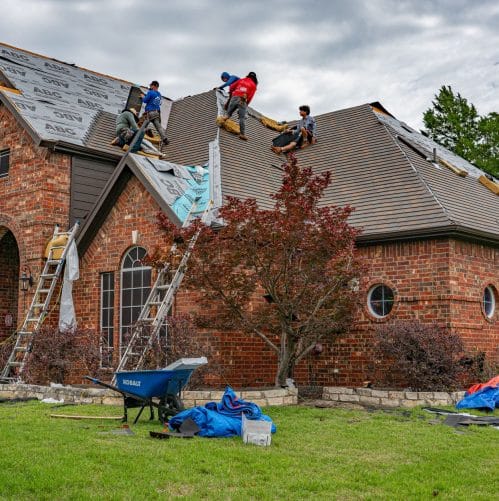
Repeated foot traffic without designated walk paths compresses insulation, wears down membrane surfaces, and can eventually cause seam separation on single-ply systems. Technicians walking direct routes to equipment, rather than using protected paths, are the most common source of this wear.
Walk pads placed along common service routes distribute weight and protect the membrane underneath. Facilities with frequent rooftop visits, such as buildings with multiple HVAC units or solar equipment, benefit the most from installing these paths permanently rather than relying on technicians to walk carefully.
Our commercial roof repair team frequently finds foot traffic wear during routine inspections, often in the same paths repeated visit after visit, which makes walk pad placement an easy fix once identified.
Seasonal contractors, such as holiday lighting installers or window washers accessing equipment from the roof, are another overlooked source of foot traffic. Building managers should track who accesses the roof and when, since that log can help identify the source of new wear patterns discovered during an inspection.
A solid maintenance plan inspects all penetration points, checks curb flashing and sealant condition, reviews walk paths for wear, and documents findings with photos at least twice a year. Adding a check after any major storm or HVAC service call closes the remaining gap.
TurnKey Roofing Team builds these checks into our commercial roofing services, since catching a loose fastener or worn walk path early costs far less than repairing water damage to the building interior below.
A written maintenance log, kept year over year, also helps building owners spot patterns, such as a specific piece of equipment repeatedly needing flashing repair. That pattern often points to a design or mounting issue worth addressing permanently rather than repairing the same spot again each year.

A reflective roof coating can extend the service life of a membrane that is structurally sound but showing surface wear, especially around high-traffic zones near rooftop equipment. It is not a fix for active leaks at penetration points, which need direct repair first.
Our commercial roof coating service works best as part of a broader maintenance plan, applied after penetration and flashing repairs are complete. Coating over an unresolved leak point only delays the eventual repair and can complicate finding the leak’s source later.
Reviewing common issues that lead to commercial roof leaks alongside your maintenance schedule helps building managers prioritize which areas of the roof need attention first.
Budgeting for coating as a scheduled maintenance item, rather than an emergency expense, also helps building owners plan capital spending more predictably. A roof on a known coating cycle is easier to budget for than one that only gets attention after a leak forces the issue.
Tenant communication matters too for multi-tenant commercial buildings. Notifying occupants ahead of a scheduled rooftop inspection or maintenance visit avoids confusion, and asking whether any tenant has installed unauthorized rooftop equipment can uncover an unpermitted penetration before it becomes a leak.
Property managers overseeing several buildings benefit from a standardized inspection checklist applied consistently across every roof, rather than relying on memory or informal notes. A repeatable process makes it easier to compare condition year over year and catch a developing problem before it becomes an emergency call.
Photographing each piece of rooftop equipment and its surrounding flashing at every inspection creates a visual history that is easy to compare over time. That habit turns a routine walk-through into a useful record if a warranty or insurance question ever comes up later.
Building this habit into the maintenance contract itself, rather than leaving it to chance, keeps the practice consistent even as staff or vendors change over the years. A documented, repeatable process protects the roof investment regardless of who happens to be managing the building at any given time.
At least twice a year, plus after any major HVAC service call. Technicians servicing equipment are not always roofing professionals and may not notice flashing damage caused during their work.
Yes, walk pads should be installed by a roofing professional so the adhesion and compatibility match your specific membrane type, whether that is TPO, PVC, EPDM, or a built-up system.
Yes, solar panel mounts create additional penetration points and increase foot traffic for maintenance, both of which require the same flashing care and walk path planning as HVAC equipment.
Indirectly. Ponding water near a penetration point puts sustained pressure on flashing seals, increasing the chance that a marginal seal fails and begins leaking sooner than it would on a well-drained roof.
Yes, coordinating a roofing inspection after major HVAC servicing catches damage from that work early, before it develops into a leak that is harder and more expensive to trace and repair.
TurnKey Roofing Team is licensed and insured (Commercial #3667) and offers preventive maintenance inspections for buildings with rooftop HVAC and equipment traffic.
Request your free commercial estimate or call (504) 910-7640.


 Turnkey Roofing Team